


Discover the age old secret.
Which came first, the law or the outlaw? Who says the only way to lose that baby fat is to starve yourself and spend hours on the treadmill. As long as procreation’s been around, savvy women everywhere have searched for easier methods to speed up the healing of their wrecked abdomens. In many cultures, belly binding after giving birth is as normal as spending a fortune on a pair of designer newborn jeans lil’ one will outgrow in a month.
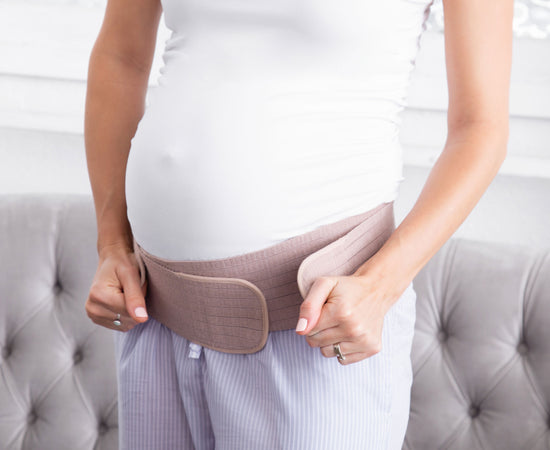
TIME TO GET ON THE BELLY BANDIT® WAGON For centuries, Japanese mothers have used their “Sarashi” to speed up weight loss and toning of the abdominal muscles and skin after childbirth, while Hispanic mommies believe their “faja” helps bring all the muscles used in the birthing process back together again. No matter what she calls it, women in Indonesia, Thailand, Singapore, Latin America, Mexico, Spain, England, and the Philippines have benefited from using an abdominal compression wrap after childbirth. No wonder so many US celebrities have gotten on board!
From reasons spiritual to medicinal to plain old vanity, stomach binding has been around as long as the Buddha. In ancient Indian rituals, binding is practiced to warm and close the open stomach and birth canal. They also believe it speeds up the ridding of waste blood. It is still common for modern Indian women to wear these binders to promote good posture during breastfeeding, persuade the stomach muscles back together, reposition the womb, and eliminate stretch marks.
Western women are quickly discovering the many reasons to continue with this ancient Eastern tradition. In ne specific case, two cousins got pregnant at the same time. The one who resisted binding took a year to get her pre-pregnancy figure back, while her cousin was back in her skinny jeans in 2 months! Do the math, that’s seriously quicker.
Eastern practices and medicine that were once thought of as unconventional have proven time and time again to be exceptional remedies. Remember when your thought yoga was weird? Come on, these people invented tea.
One more interesting thing to think about…weight lifters & construction workers are always seen with support belts to protect their back, core and legs. Yet women who have just given birth and are physically at their weakest point are now expected to carry more weight and responsibility than ever. Heavy objects such as car seats, bottle bags, strollers, 10 lbs. + babies and more with absolutely no support. It’s due time ladies…
The following are excerpts from books, internet research and other periodicals that we found interesting and useful during our research of the Belly Bandit. As mentioned previously, many cultures around the world have used the knowledge of abdominal binding to help women after childbirth for decades.
Please note we are relaying the following as we found it in our research therefore we have not corrected any spelling or grammatical errors.
History of Abdominal Binding...
“Massage and binding is a traditional postpartum ritual practiced by the Maya women in the Yucatan. It is analogous to the American 6 week medical checkup and is the last duty of the midwife and symbolizes the mother’s return to normal life. If the massage and binding does not occur the postpartum woman is expected to have trouble breastfeeding her infant, lose weight, become pale, and suffer general debility… In the final stage of the massage process, another female relative (usually the mother-in-law) helps the midwife by laying the binder over the abdomen and passing the ends to each other under the small of her back. The binder is cinched around the pelvis as tightly as the woman can stand it.”
Fuller, Nancy and Brigitte Jordan. Maya Women and the End of the Birthing Period: Postpartum Massage-and-Binding in Yucatan, Mexico. Medical Anthropology, 5(1): 35-50, 1981
Hispanic Traditions & Pregnancy Post Partum
Immediately after the delivery of the placenta female relatives would rush to put on Faja, a band that is placed around the abdomen of the mother and baby. This band is thought to prevent herniation. For the first forty days post partum the mother and baby traditionally received total care from family. Diet changes included no green foods, cold foods, or beans because it was believed to cause colic and infection. Honey, rosemary tea, and chamomile tea were believed to help in the healing process. New mothers would often have other moms come and breastfeed their child. It was a common belief that colostrum was not sufficient and they w anted to ensure the baby had an adequate diet.
Moore, Julie. Transcultural Index. Hilo. 2006.
http://www.hawcc.hawaii.edu/nursing/RNHispanic06.htm
“During a confinement period, Hmong women also practice abdominal binding. This is an effort to bring the woman’s abdomen back to its normal shape. It also makes the woman feel more comfortable after eating because the abdomen does not become overly expanded.
One woman explained:
‘You bind the tummy to help making the body feel tight… When you are pregnant the tummy gets bigger. You bind it so that the belly skin doesn’t fall down low…. If you don’t do that then with every meal that you eat and feel full your tummy will expand to the size that you were when you were pregnant…. When you eat and feel full your tummy will not be too big. You bind it to make you feel comfortable.’
Another woman explained:
‘You do it so that your tummy will not be big. If you don’t do it then with each child your tummy will be bigger and bigger and then you will not look good. If you want your tummy to be slim then you will tie your tummy up so that it will not look fat…. If you don’t do it then after one month your tummy will look big and not nice and you won’t like it.’”
Rice, Pranee Liamputtong. Hmong Women and Reproduction. Westport: Bergin & Garvey, 2000.
“It is believed that during the hasi may heat gives back the strength and energy which is lost during delivery. Heat is believed to freshen the blood and to create new blood. Moreover, warmth relieves the pain suffered at the time of delivery. Warmth, too, is believed to be good for the ‘open stomach’ and to tighten the stomach again. For this, women also ‘bind the stomach’ with a cotton cloth tied around the underbelly ‘to get the stomach down and to close the open stomach again.’ Women explained that due to pregnancy their belly had expanded and by binding the stomach it would return to its normal shape. In addition, ‘the birth canal is open after delivery and should be closed again.’
The cotton cloth worn after delivery speeds up this process. Stomach binding is also believed to be good to get rid of waste blood.”
Makhlouf, Carla. Cultural Perspectives on Reproductive Health. New York, Oxford University Press, 2001.
“She must dress in a long-sleeved shirt, several lower garments, long socks if she can get some, a stomach binding cloth (to flatten the belly), and most importantly, a cloth turban or woolen hat to protect her head.”
Stott, Philip Anthony, ed. Nature and Man in South East Asia. London: RoutledgeCurzon, 2001.
“Heated lime and lime juice was then applied to the abdomen, and the binding wrapped: Safiah, though, used alcohol spirit and wore a Western corset instead.”
Dundes, Lauren. The Manner Born: Birth Rites in Cross-Cultural Perspective. Lanham: AltaMira Press, 2003.
Japanese girdle wrap – ‘sarashi’
“Most midwives are aware of the importance of the deep abdominal muscles such as the internal obliques in supporting the spine as well as the abdomen and baby, and will advise on exercises such as the cat and simple abdominal work to support these muscles. This is working with the energy of the Girdle Vessel.”
“Traditionally, the Japanese would wear a girdle wrap during the pregnancy. You have to remember that they would be wearing kimonos which fastened round the waist with a belt, obi. They have small, slim bodies and would have been doing physical work which would keep the abdominal muscles strong….”
“The traditional wrap or ‘sarashi’ would first be worn on a special day around the 16th – 19th week of pregnancy; this is known as ‘dog day’ because dogs are supposed to have easy births and the dog spirit can protect and take away bad fortune. The mother would either wrap it herself or get her husband or other family member to do so…. Each night she would take it off and rewrap it in the morning. She would keep doing this till about 1 month after the birth. It was said to help… the mother’s posture and easing backache. The lines of wrapping support both the Conception Vessel and Girdle Vessel.
Yates, Suzanne Virginia Louise, and Tricia Anderson. Shiatsu for Midwives. New York: Books for Midwives, 2003.
Filipina Women – Post Partum
The hilot would teach the mother to bind her hips tightly to bring all the muscles used in the birthing process back to normal again. The tear on her vagina would also go back together and return to its pre-pregnancy state.
Moore, Julie. Transcultural Index. Hilo. 2005.
http://www.hawcc.hawaii.edu/nursing/RNFilipino_04.html
London, 1940’s:
Marks & Spencer was far more specific. Their ‘belt’ was a six buckle corset designed to return the post-natal abdomen to its former proportions. Ivy Leaf. 2008.
http://www.corsetiere.net/Spirella/Marks.htm
Javanese Women – Post Partum
It is customary for the Javanese women to bind their abdomen with a long cotton cloth during the period of ‘confinement’ after giving birth to their babies. The main reason the Javanese wrap is done is to shrink the distended uterus faster and dispel the lochia, which would return the new mother to her normal “clean” self. Of course, a popular reason for binding the abdomen after pregnancy would be to flatten the stomach and re-define the waistline. This practice of being ‘wrapped’ is done usually after a full body massage when the postnatal massage therapist gently ‘pushes’ the distended uterus back to its original position to shrink it. This would be done at the end of the massage session, after which the new mother would be bound tightly with the cloth to hold the uterus in place. The Javanese use traditional herbs, or jamu, for their massages and more jamu is applied on the stomach area prior to the wrap. The traditional Javanese people wrap their women from as high up as just under the bust line to far below the crotch. Wrapping just the stomach and abdominal area is just as effective, and is not overly restrictive. Every new mother who has done the warp has been highly pleased with the results. In fact, most new mothers find the modified wrap rather comfortable after the first couple of days and are grateful as it helps with keeping their backs straight, especially when breastfeeding.
Whilst the Javanese women undergo the wrap for the full 40 days of their confinement, Hannah recommends a minimum period of 10 consecutive days for today’s modern mothers. Although results on the stomach and waistline can clearly be seen by around the 5th day, it is advisable to keep going for the minimum period of ten days to ensure that the abdominal muscles do not relax and loosen again. Some new mothers, encouraged by the results, opted to continue for 20 days or more and were not disappointed, as the longer the wrap was kept on, the more the tummy muscles shrink.
Wong, Hannah. Singapore. 2006.